




Access Is Not Assistance: Why India Keeps Helping Disabled People Instead of Including Them

Divya Kashyap - PhD scholar Disability and media studies Guru Gobind Singh Indraprastha University
IIMC-Alumni
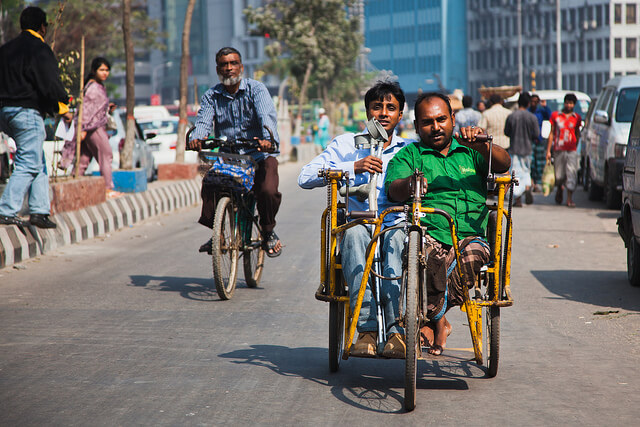
A young man in a wheelchair reaches a metro station entrance in a major Indian city. There is no ramp on his side, but within seconds, three strangers rush over, lift his chair between them, and carry him up the stairs. He thanks them. They walk away pleased with themselves. Nobody files a complaint. Nobody asks why a station built in the last decade still has no ramp at that entrance. The problem has been “solved” for today, for him, by sheer luck of who happened to be walking past.
This is the quiet, well-meaning trap at the heart of India’s disability story. We have become a country that is very good at helping and still fairly poor at including. And those are not the same thing.
The difference between being helped and being able
Help is what happens when a system fails and a person steps in to fix it in the moment. Access is what happens when the system doesn’t fail in the first place. A ramp means a wheelchair user can enter a building on their own schedule, without waiting for someone kind to be nearby. A functioning lift means a person doesn’t have to announce their disability to a stranger just to reach the second floor. An audio announcement at a traffic signal means a visually impaired commuter can cross a road without needing an escort.
When access is missing, help becomes the substitute and it is a poor one. Help depends on the mood, time and willingness of strangers. It is inconsistent, unpredictable and, most importantly, it makes a disabled person’s ability to move through the world conditional on someone else’s goodwill. That is not dignity. That is dependency dressed up as kindness.
India’s public conversation on disability has, for years, celebrated the helpers. News stories praise commuters who carried a wheelchair, students who assisted a blind classmate, security guards who “went out of their way.” These stories are heartwarming, and the people in them deserve credit. But when a society keeps producing such stories decade after decade, it should worry us not comfort us. It means the underlying design failure has never actually been fixed. We have simply gotten better at working around it, person by person, building by building, day by day.
Why this matters more than it seems
The attitude gap shows up in small, everyday moments that rarely make headlines. A shopkeeper who speaks to the companion of a disabled customer instead of the customer themselves. A form that has no way to indicate an accessibility need, so the request has to be made verbally, repeatedly, at every counter. A job interview where the panel is more curious about “how you manage” than about the candidate’s actual qualifications. None of these are accidents of infrastructure. They are habits of mind the assumption that disability is primarily something to be pitied or accommodated as a favour, rather than a routine variation in how people move through and experience the world.
This matters because infrastructure alone cannot fix an attitude problem, and India has, for the most part, been trying to solve a two-part problem with a one-part answer. Ramps and lifts address the physical half. But the social half how disabled people are spoken to, hired, consulted and trusted with independence needs a different kind of investment: one in awareness, representation and habit change, not concrete.
What genuine inclusion actually looks like
Genuine inclusion is boring, in the best sense. It looks like a ramp that is simply there, used without commentary, the way stairs are. It looks like a disabled employee whose accommodation was built into the office plan rather than negotiated as an exception after they were hired. It looks like public transport announcements that are audible and visual by default, not added only after a complaint. It looks like disabled people being consulted while a building, an app or a policy is being designed not invited to give feedback after it is already built and the changes become expensive “retrofits” instead of standard practice.
This is also, fundamentally, a design and planning failure rather than a compassion failure. India does not lack sympathy for disabled citizens. It lacks the habit of designing for them from the start. Urban planners, architects, app developers, HR teams and event organisers rarely ask, at the drawing-board stage, “who might this exclude, and how do we prevent that now, rather than patch it later?” Until that question becomes routine asked as automatically as a budget or a timeline India will keep building spaces that need to be rescued by strangers rather than spaces that simply work.
A different kind of ask
None of this is a call to stop helping. If a ramp is missing today, please help the person in front of you. But help should be the exception that reveals a gap, not the system that fills it permanently. Every time a stranger has to carry a wheelchair up a flight of stairs, that should register as a failure worth reporting to the building manager, the municipal body, the railway authority not as a feel-good moment worth forgetting.
The real measure of an inclusive India will not be how many people step up to help. It will be how rarely anyone needs to. That shift from a culture of assistance to a culture of access is not a matter of more ramps or more laws. Both already exist on paper in significant numbers. It is a matter of who we imagine our public spaces are for, right from the moment we start designing them. Until disabled citizens are part of that imagination by default, independence will keep depending on the kindness of whoever happens to be walking by.